Create Engaging Quizzes with an AI Quiz Maker
In the era of digital learning, an AI quiz maker stands out as a powerful tool for educators and businesses. It simplifies the process of creating engaging quizzes that not only assess knowledge but also enhance learning experiences. This guide is designed for educators, trainers, and business professionals looking to utilize AI technology to create efficient and interactive quizzes. By the end, you’ll understand how an AI quiz maker can transform your quiz creation process and improve engagement.
Quick Answer
An AI quiz maker automates quiz creation by utilizing machine learning algorithms to generate questions and assessments tailored to specific needs. This technology not only saves time but also ensures quizzes are varied and relevant, catering to diverse audiences.
Table of Contents
- What is an AI Quiz Maker?
- How Does an AI Quiz Maker Work?
- Benefits of Using an AI Quiz Maker
- Limitations of AI Quiz Makers
- Best Practices for Using AI Quiz Makers
- Who Should Use an AI Quiz Maker?
- Common Mistakes to Avoid
- Alternatives to AI Quiz Makers
- Latest Developments in AI Quiz Creation
- FAQs
- Conclusion
What is an AI Quiz Maker?
An AI quiz maker is a software tool that leverages artificial intelligence to assist users in creating quizzes. Unlike traditional quiz-making methods, which can be time-consuming and labor-intensive, these tools automate question generation and formatting. They analyze various inputs like subject matter, difficulty level, and even user preferences to produce relevant questions and answer options.
This technology has become increasingly popular in educational institutions and corporate training programs. By integrating machine learning, AI quiz makers adapt to the specific needs of the user, providing a customized experience that can significantly enhance learning outcomes. The quizzes can cover a wide range of topics, from basic knowledge checks to complex assessments that gauge critical thinking skills.
For instance, a high school teacher might use an AI quiz maker to create a test on Shakespeare’s plays. The AI can generate questions that assess comprehension, character analysis, and thematic exploration—all tailored to the curriculum’s focus. This adaptability can be especially beneficial in diverse classrooms, where students may be at different levels of understanding.
How Does an AI Quiz Maker Work?
The core functionality of an AI quiz maker revolves around algorithms that analyze data to generate quiz content. Initially, users input parameters such as topic, question type (multiple choice, true/false, etc.), and difficulty level. The AI then processes this information, often using natural language processing to create questions that are contextually relevant and engaging.
Many AI quiz makers also incorporate feedback loops, allowing them to learn from user interactions. For instance, if a user frequently chooses certain types of questions or answers, the AI adjusts future quiz suggestions accordingly. This adaptability is a major advantage, as it helps keep quizzes fresh and aligned with user expectations.
Imagine you’re a corporate trainer preparing a workshop on effective communication skills. You feed the AI quiz maker specific topics like “non-verbal communication” and “active listening.” The AI generates questions ranging from scenario-based queries to theoretical concepts, ensuring a comprehensive assessment of the trainees’ understanding.
Benefits of Using an AI Quiz Maker
Utilizing an AI quiz maker provides numerous advantages. Firstly, the efficiency gained is significant. Instead of spending hours crafting questions, educators and trainers can produce high-quality assessments in a fraction of the time. This efficiency allows for more quizzes to be created, catering to different learning objectives and outcomes.
Moreover, these tools enhance engagement. By generating diverse questions that challenge users, they maintain interest and promote deeper learning. AI quiz makers can also analyze user performance, providing insights that can help tailor future learning materials or focus areas for individual users.
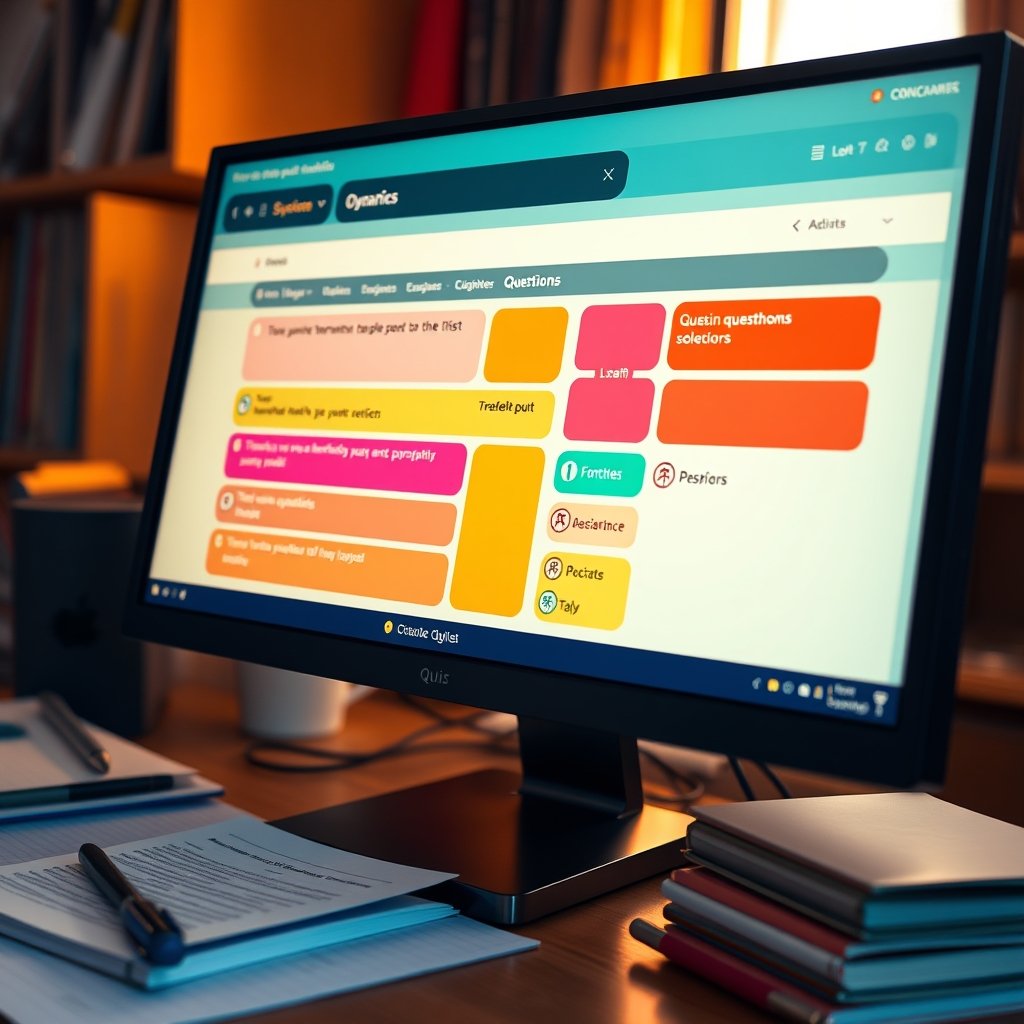
- Efficiency: Rapid quiz creation saves significant time.
- Engagement: Diverse question types keep users interested.
- Customization: AI adapts to user preferences and learning styles.
- Analytics: Provides insights into user performance and areas for improvement.
For example, a college professor can quickly generate quizzes for each week of a semester, adjusting difficulty based on students’ performance in previous assessments. This continual adaptation ensures that students are both challenged and supported in their learning journey.
Limitations of AI Quiz Makers
While the advantages are compelling, it’s important to recognize the limitations of AI quiz makers. One key drawback is the potential lack of contextual understanding. AI may generate questions that, while technically correct, may not fully align with the nuances of the subject matter or the specific teaching goals.
Additionally, reliance on AI tools can lead to a reduction in creative input from educators. It’s essential to balance the use of technology with personal touches that ensure assessments reflect individual teaching styles and objectives. Over time, excessive dependence on automated tools might hinder the development of critical questioning skills among educators. Gemini for Coding: Harnessing AI's Power in Development
- Lack of Context: AI may miss subtle subject nuances.
- Reduced Creativity: Dependence on AI can stifle personal input.
- Cost: Some AI quiz makers come with a subscription fee.
As a personal anecdote, I once relied heavily on an AI quiz maker for a training module, only to find that the questions lacked the depth I wanted for my audience. While the quizzes were technically accurate, they missed out on the engaging scenarios that I typically include. This experience taught me the importance of integrating my personal insights into AI-generated content.
Best Practices for Using AI Quiz Makers
To maximize the effectiveness of an AI quiz maker, it’s crucial to follow best practices. Start by defining clear objectives for the quizzes. Understand what knowledge or skills the quiz should assess and structure the questions accordingly. Clear goals help the AI generate more relevant content.
Next, incorporate a variety of question types. Mixing multiple-choice questions with open-ended responses can provide a more comprehensive assessment of user knowledge. Regularly update and revise quiz content based on user feedback and performance analytics to keep quizzes relevant and challenging.
- Define Clear Objectives: Set specific goals for each quiz.
- Use Diverse Question Types: Combine different formats for depth.
- Review and Update: Regularly refresh content based on feedback.
- Engage Users: Encourage users to provide feedback on quizzes.
In a training workshop I facilitated, I encouraged participants to provide feedback on the quizzes generated by AI. Their insights led to several improvements, including the addition of real-world scenarios that made the questions more relatable and effective.
Who Should Use an AI Quiz Maker?
AI quiz makers are particularly beneficial for educators, trainers, and HR professionals. Teachers looking to assess student progress can save time while ensuring quizzes are engaging and varied. Corporate trainers can utilize these tools to develop assessments that ensure employees understand necessary concepts and skills.
Moreover, businesses that rely on customer training or onboarding processes can leverage AI quiz makers to enhance their training programs. However, it’s essential to recognize that they may not be ideal for every scenario. For highly specialized fields requiring deep expertise, manual input from subject matter experts may still be necessary.
- Educators: Teachers and trainers looking for efficient assessment tools.
- Corporate Trainers: HR professionals enhancing training programs.
- Businesses: Organizations needing customer training solutions.
For example, a language school might use an AI quiz maker to create quizzes that help students practice vocabulary and grammar, tailoring the difficulty as students progress through different levels. This targeted approach can lead to better learning outcomes.

Common Mistakes to Avoid
When using AI quiz makers, certain pitfalls can undermine the effectiveness of the quizzes. A common mistake is failing to review AI-generated content for accuracy and relevance. While AI can produce questions quickly, it doesn’t always ensure quality or contextual fit.
Another mistake is neglecting to analyze quiz results and user feedback. This data is invaluable for improving future quizzes and understanding user performance. Ignoring it may lead to repetitive questions and diminishing engagement over time.
- Not Reviewing Content: Always check AI-generated questions for relevance.
- Ignoring Feedback: Use analytics to improve quiz quality.
- Over-Reliance: Balance AI use with personal input for quality.
For instance, a colleague of mine once created a series of quizzes without reviewing the AI’s output. The quizzes ended up containing questions that were either too easy or not aligned with the course material. This experience highlighted the need for a manual review process to ensure quality control.
Alternatives to AI Quiz Makers
While AI quiz makers are highly effective, there are alternatives worth considering. Traditional quiz tools that allow for manual question input can still be useful, especially for specialized subjects where contextual understanding is critical. These tools offer full control over question quality and relevance.
Additionally, other technologies like learning management systems (LMS) often include quiz-making features. These platforms can integrate quizzes into broader learning experiences, allowing for a more comprehensive educational approach. Exploring Gemini Image Generation: Revolutionizing Visual Content
- Traditional Quiz Tools: Manual input for full control.
- Learning Management Systems (LMS): Integrated quizzes for a holistic approach.
For example, an LMS used in a corporate training program might include quizzes as part of the overall curriculum, allowing for a more integrated learning experience that combines videos, readings, and assessments.
Latest Developments in AI Quiz Creation
The field of AI quiz creation is rapidly evolving. Recent advancements include improved natural language processing capabilities, which enhance the AI’s ability to generate contextually appropriate questions. Machine learning models are now better at analyzing user interactions, leading to more tailored quiz experiences.
Additionally, integration with other educational tools is becoming more prevalent. For instance, some AI quiz makers now offer features that allow for direct incorporation into online courses or learning platforms, making it easier to create cohesive educational experiences.
Consider how an AI quiz maker integrated with a video learning platform can create quizzes that not only assess knowledge but also prompt students to reflect on what they’ve just learned. This integration can significantly enhance retention and understanding.
FAQs

What is an AI quiz maker?
An AI quiz maker is a software tool that automates the quiz creation process using artificial intelligence to generate customized questions and assessments.
How does an AI quiz maker enhance learning?
By providing diverse, engaging questions that adapt to user performance, AI quiz makers keep learners motivated and help identify areas for improvement.
Can AI quiz makers replace traditional quiz creation methods?
While AI quiz makers can significantly streamline the process, they may not fully replace traditional methods, especially in specialized subjects requiring deep expertise.
What are the limitations of AI quiz makers?
Key limitations include potential inaccuracies in context, reduced educator creativity, and reliance on technology that might not fully capture nuanced subject matter.
Who should consider using an AI quiz maker?
Educators, trainers, and businesses looking for efficient, engaging ways to assess knowledge and skills should consider using an AI quiz maker.
Conclusion
AI quiz makers represent a significant advancement in the way quizzes are created and utilized. By streamlining the quiz-making process and enhancing engagement through tailored content, these tools can transform educational experiences. However, it’s crucial to balance their use with personal input and regular reviews to maintain the quality and effectiveness of assessments. As technology evolves, staying informed on the latest developments will ensure users maximize the benefits of AI in quiz creation.
If you’re interested in further exploring how advanced AI tools can enhance your professional skills, check out Gemini for Coding: Harnessing AI’s Power in Development or learn about AI for Marketers: Transforming Strategies and Efficiency to see how these innovations can make a real difference.
About the Author